
Start static
Publish explanatory pages and embed static JSON examples first.
Developer integration
A developer-facing guide to static routes, evidence payloads, machine-readable assets, and implementation boundaries without live crawlers or unsafe runtime claims.
Keep three layers separate: public website content, internal interpretation services, and external converter or Protocol5-style APIs.
The website can explain the model without becoming the mutation surface. Public readers should inspect evidence; they should not alter symbol registries, embedding stores, or source ontologies from the public site.
This guide describes an integration pattern. It does not assert that every component is deployed on the public site. Static pages may show examples until live services are available.
Return a bounded gloss and the evidence that made it allowed. Do not return a bare translation string as if meaning were settled.
{
  "input": "ɪ≃1",
  "mode": "glyph-first",
  "direction": "IotaToEnglish",
  "returnEvidence": true,
  "resultLimit": 5,
  "profile": "public-symbol-only"
}{
"output": "iota approximately one",
"canonical": "Approximate(Iota, Unit)",
"approximate": true,
"confidence": 0.68,
"publicOutputEligible": true,
"warnings": ["approximate interpretation", "not exact translation", "not a hidden codebook"],
"trace": {
"normalization": "NFC",
"graphemeClusters": ["ɪ", "≃", "1"],
"rankingLanes": ["semantic", "structure", "ontology"],
"R_before": 0.57,
"action": "no-op"
}
}Publish explanatory pages and embed static JSON examples first.
Live widgets should wait for API stability, CORS, latency, fallback, and diagnostics.
Do not expose write routes for glyph records, vector population, or ontology edits.
<div class="td-evidence-demo" data-example="iota-approx-one">
  <label for="td-input">Try a public-symbol example</label>
  <input id="td-input" value="ɪ≃1" />
  <button type="button">Show evidence</button>
  <pre class="td-output" aria-live="polite"></pre>
</div>
The first version can load local static examples from /iota-walkthroughs.json. A later version can call a read-only API endpoint.
{
  "status": "unresolved",
  "reason": "private-use-character-detected",
  "publicOutputEligible": false,
  "message": "This input contains private-use code points. Public interpretation is not available."
}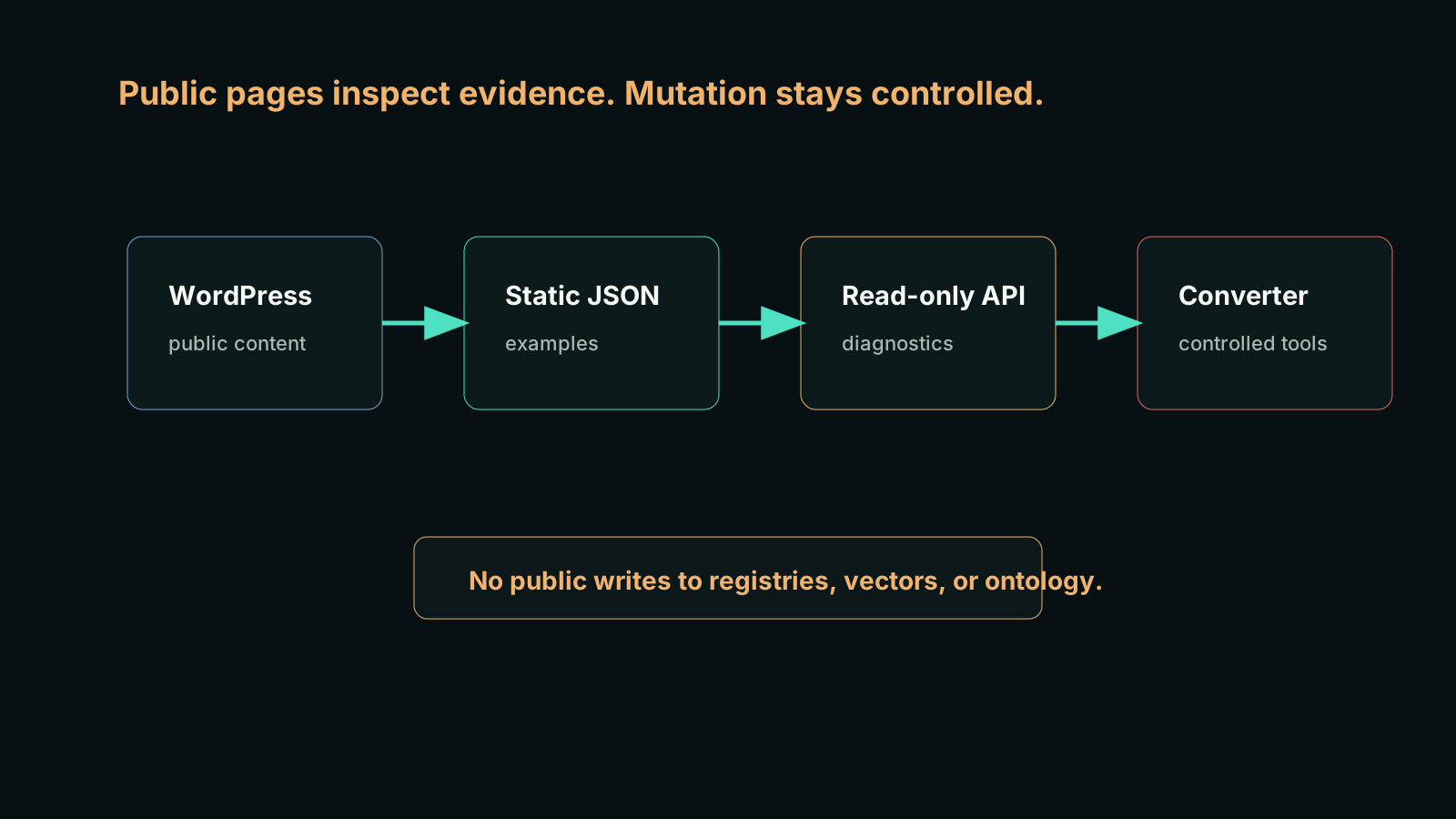
Suggested diagram: website content, static examples, read-only evidence endpoint, and controlled Protocol5-style tooling.
This guide turns Protocol5 Roadmap, Glyph Object Specification, IOTA-1 Walkthroughs, and Evaluation Lab into an implementation sequence.
Do not imply the public website itself is the converter authority. Do not expose public write routes for symbol registries, embeddings, or ontology edits.
Deep route polish
The developer visual connects page concepts to static assets, JSON records, route manifests, and validation tests.
Developer Integration should help builders copy the safe pattern: typed records, visible warnings, local static assets, no tracking, and validation before public claims widen.
A converter payload can include input surface, candidate canonical form, confidence, warnings, evidence links, and human-review status without claiming exact translation.
| Focus | What to inspect |
|---|---|
| Page route | Human explanation and visible boundaries. |
| JSON asset | Machine-readable static data. |
| Validation test | Repeatable check that boundaries remain intact. |
Integration notes are implementation guidance, not an SDK, hosted API, or production-service promise.